Boiler House Garden
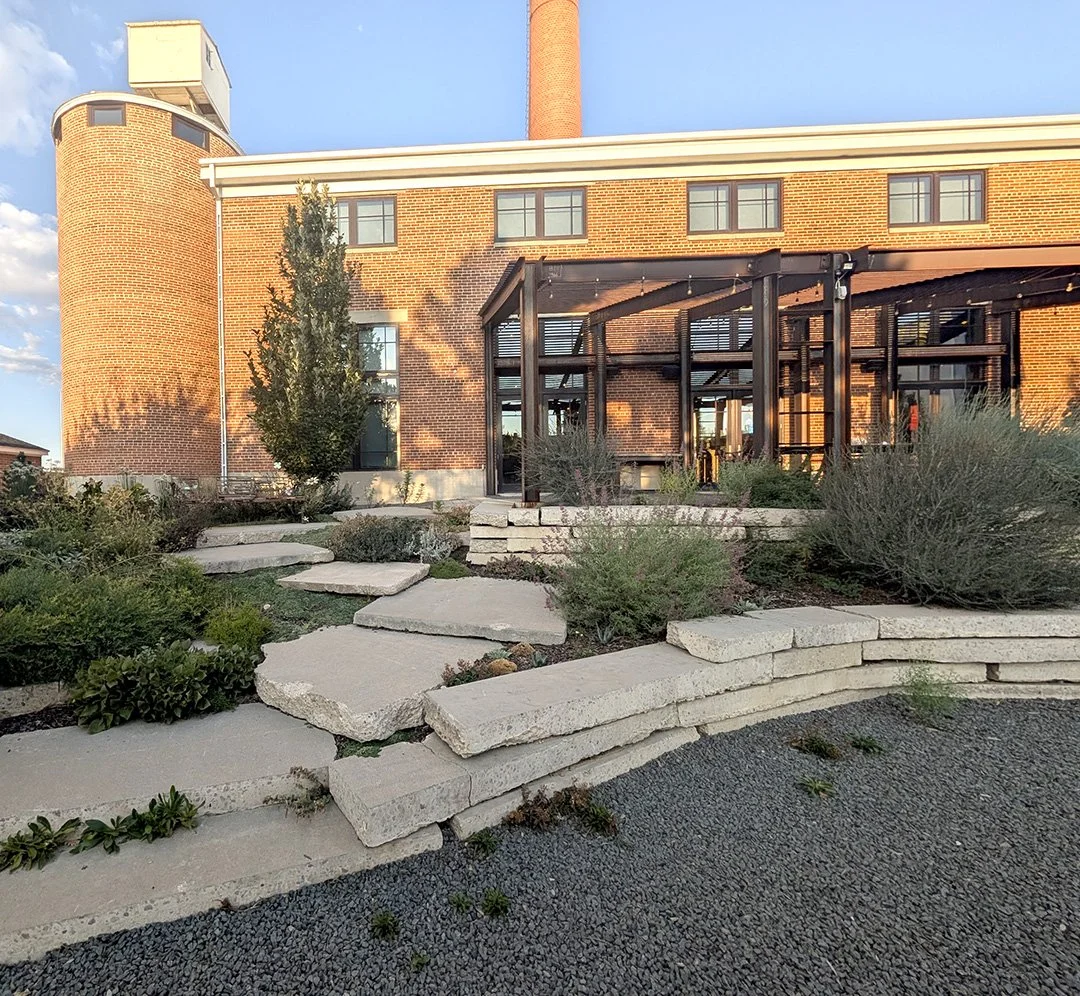
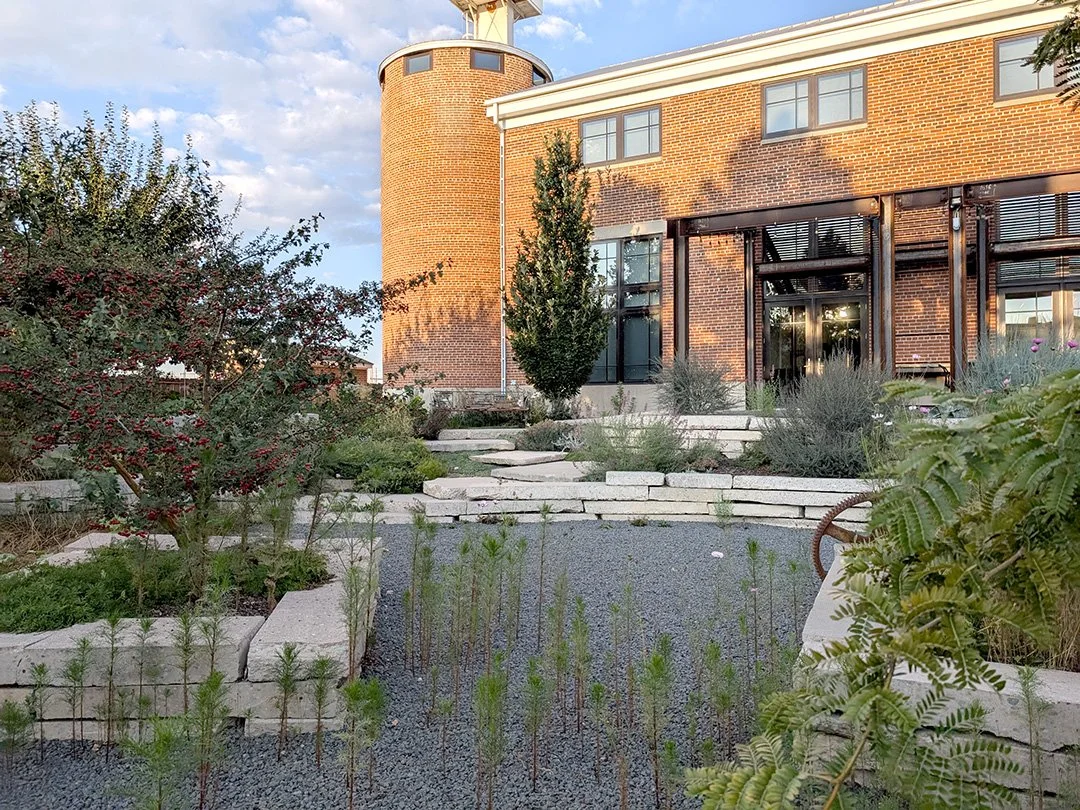
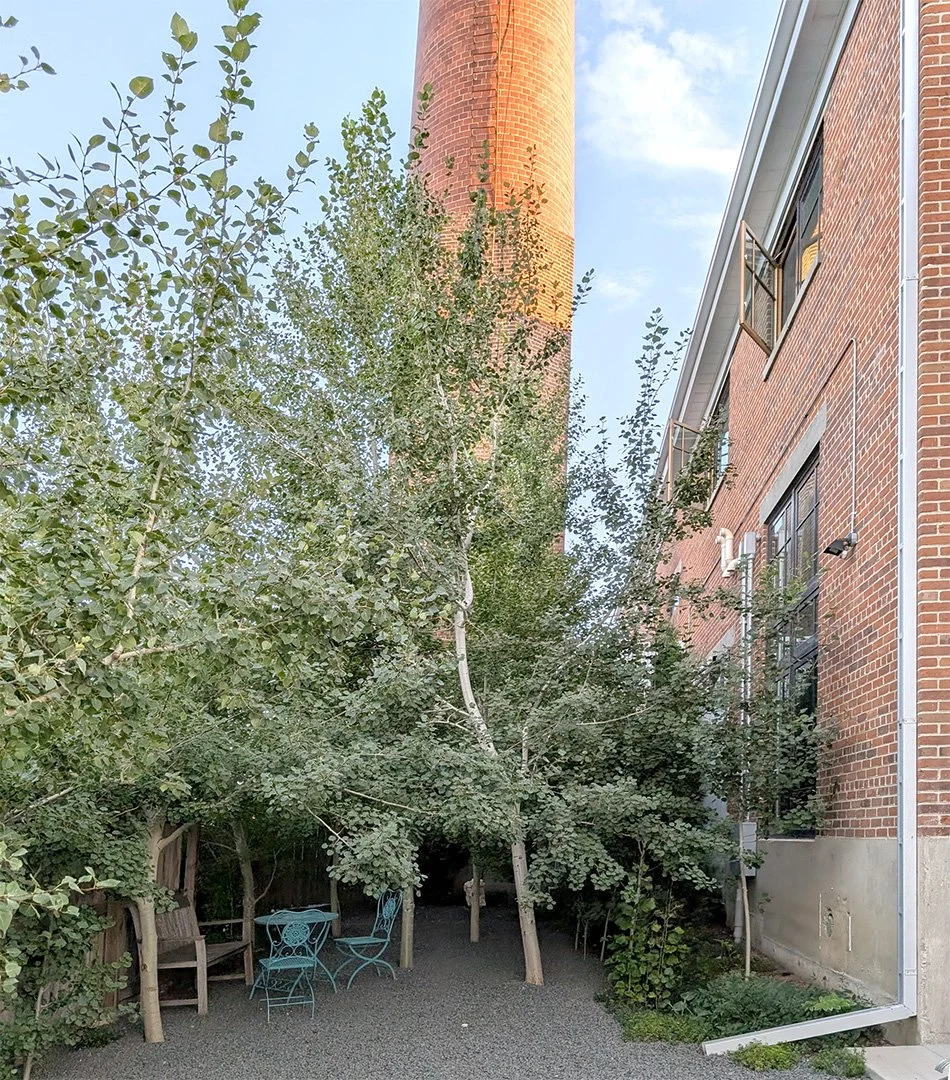
When my clients purchased the Boiler House in Denver's Clayton neighborhood, they bought a piece of history—7,500 square feet of industrial memory designed by Temple Hoyne Buell in 1942. Three coal-fired boilers once sent steam heat to the Denver Army Medical Depot. The original smokestack, coal silo, and fly-ash building remain—not as relics they tolerate, but elements they celebrate.
This is their second garden with me. The husband is an avid gardener and cook, so this garden is about abundance: fruit trees, extensive vegetable beds, the pleasure of eating what you grow. When they tore up the concrete parking lot, they didn't haul it away. They broke it up and reused it—for retaining walls, for paths. Industrial material repurposed for living things.
Where that parking lot once sat, there's now a sunken garden. Cosmos grow wild in gravel. A fig tree bears fruit—a Mediterranean memory thriving at high altitude. Between the garden and busy York Street, we built a large berm planted thick with native grasses and shrubs—a living wall that screens without shutting out.
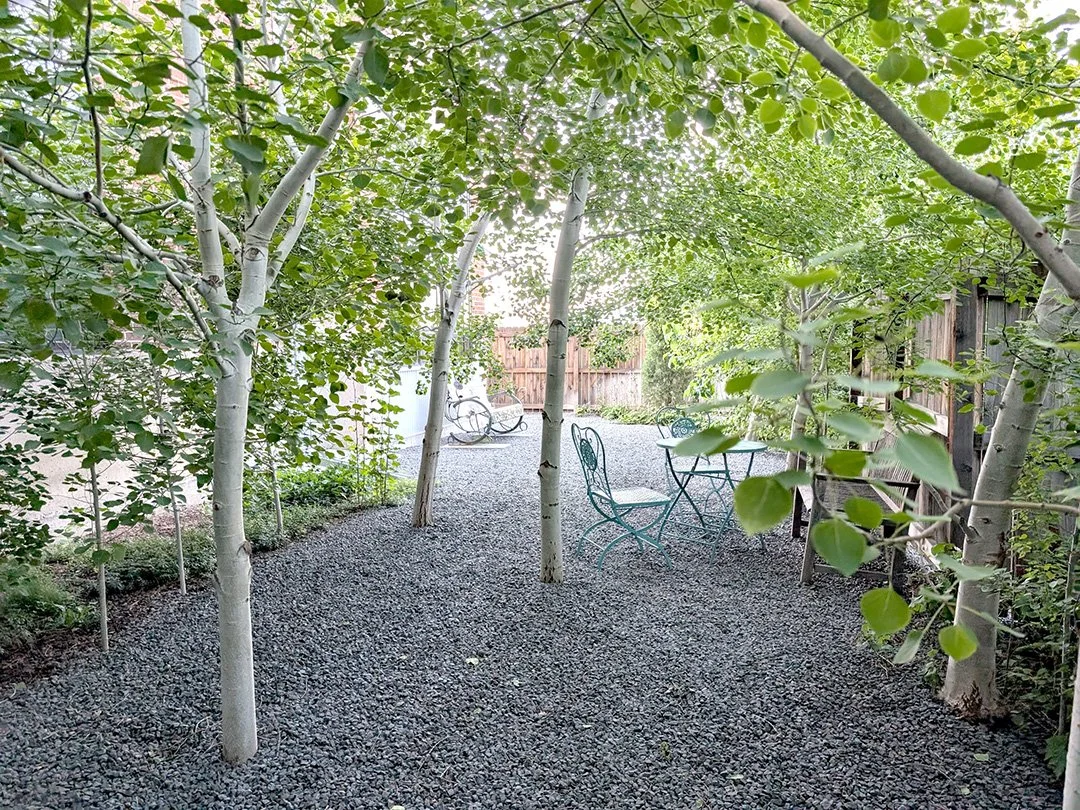
In the back, an aspen forest grows in gravel, creating shady refuge in Denver summers. The wife's writing office overlooks this manufactured woodland. The concrete that once supported cars now supports flowers. Transformation is always possible. Even a boiler house can become home.